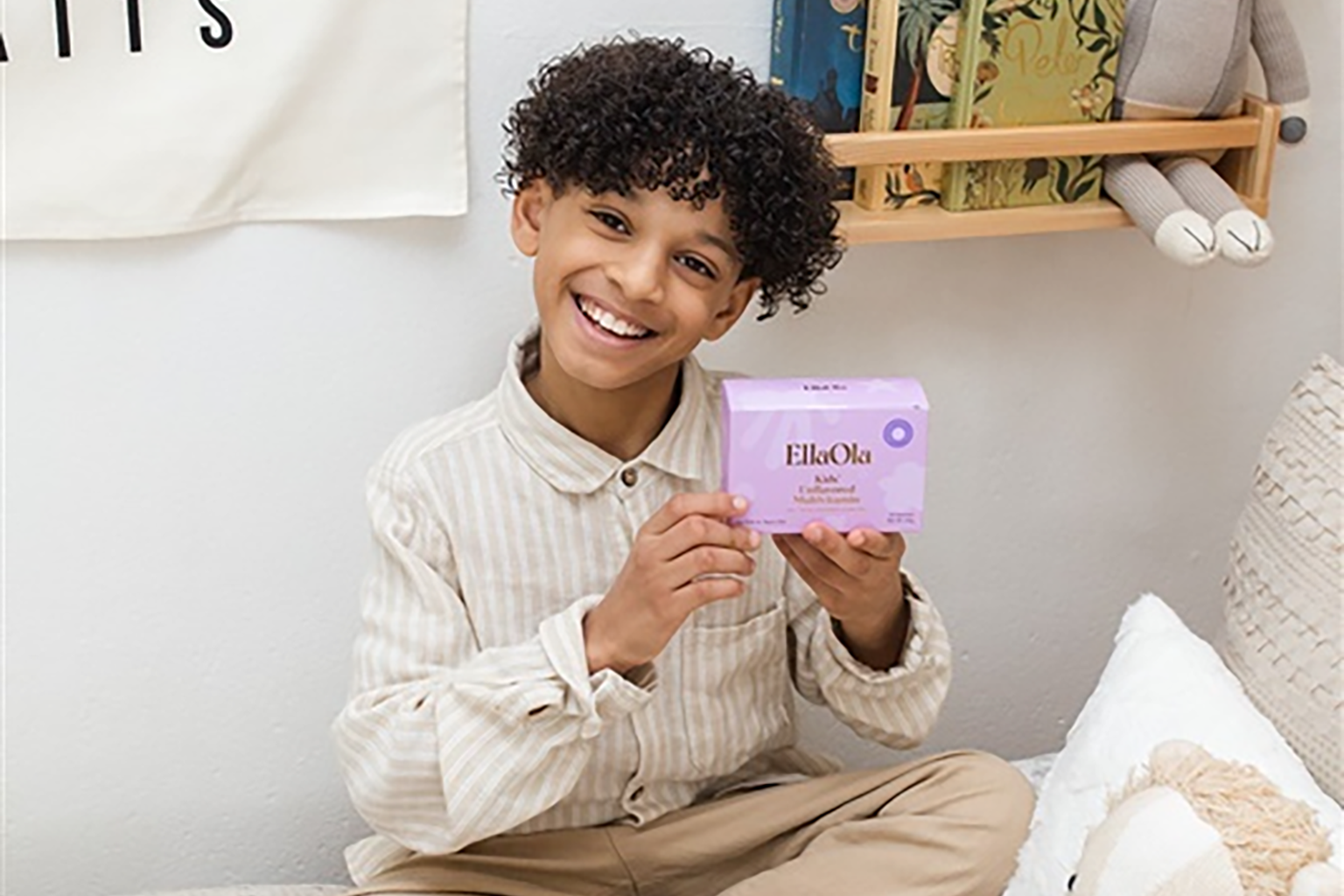

If your child spits out every gummy, or your dentist raised an eyebrow at the vitamin jar, you have more options than the gummy aisle suggests. The main alternatives to gummy vitamins are chewable tablets, liquid drops, tasteless powders, and swallowable tablets. For many kids, food alone covers it.
The right one comes down to two questions: what does your child need the vitamin to provide, and will they actually take it? At EllaOla, we make tasteless powder multivitamins that mix into familiar foods and drinks, for kids who won't take a gummy. This guide compares each format's trade-offs, what to check on the label, and how to match one to your child's age and tastes.
Why Parents Move Away From Gummies
The dental concern comes up first. Gummies are sticky, and many carry added sugar. The American Dental Association notes that sticky foods stay on teeth longer, while acidic and citrus foods can wear down enamel. A sour-coated gummy is both sticky and acidic. We covered the full picture in our post on whether gummy vitamins are bad for kids' teeth, so we'll keep it short here.
The candy problem goes beyond cavities. A vitamin that looks and tastes like a fruit snack invites kids to sneak extra, and the American Academy of Pediatrics warns that very large doses of vitamins A, C, or D can cause toxic symptoms. Any vitamin belongs out of reach, but candy-shaped ones especially.
Then there are the formula limits. A UT Southwestern dietitian explains that iron is often left out of gummies because its metallic taste is hard to mask, and that manufacturers commonly add extra to offset expected breakdown, so a gummy's actual dose can run higher than its label. The same article notes that gummy quality is less consistent. In ConsumerLab's multivitamin review, gummies were the format most likely to fail label-accuracy testing.
The Main Alternatives to Gummy Vitamins, Compared
Every format below can deliver solid nutrition. The differences come down to your child's age, taste and texture sensitivity, and what you need the vitamin to contain.
1) Chewable Tablets
Chewable tablets are tablets your child chews before swallowing. They're the most familiar alternative and the easiest to find in stores.
Before offering one to a younger child, check the label's age range and whether your child is ready to chew a tablet.
The upsides: no refrigeration, easy to count, and often broader mineral coverage than gummies. Chewable versions with iron are common. The trade-offs: a chalky or tart taste that some kids refuse. Many contain sugar alcohols like xylitol or sorbitol, and some contain artificial dyes. They also still look like a treat to a preschooler.
On the label, check the sweetener type, any colorings, and whether the listed dose is per tablet or per two tablets.
2) Liquids and Drops
Liquid vitamins are measured with a dropper or oral syringe, which is why they're the standard for infants and young toddlers. Vitamin D drops for babies are the classic example.
The upsides: no chewing or pill-swallowing required, doses adjust easily, and small amounts mix into a drink. The trade-offs: often strong flavor (iron and fish oil especially), refrigeration and a short shelf life once opened for some products, mess, and room for measuring errors.
Some liquid iron products can temporarily stain teeth. The Mayo Clinic says mixing the dose into water or juice and placing dropper doses well back on the tongue helps prevent stains, and brushing with baking soda usually removes them. Ask your pediatrician how to give the specific product and your dentist how to manage any staining.
Check the serving size in milliliters, added sugar or glycerin, preservatives, and storage instructions after opening.
3) Powders and Mix-Ins
Powder vitamins come in pre-measured sachets or tubs with a measuring scoop and are mixed into food or drinks. Taste, color, and texture vary by formula. EllaOla’s multivitamin powders are tasteless and colorless and come in pre-measured stick packs.
The upsides: no tablet or gummy to chew, no candy association, pre-measured packets that reduce measuring steps, and many are sugar-free. They travel well. The trade-offs: your child has to finish the portion of food it's mixed into, some powders change a food's texture or color, and some can't go into hot food. Check the label.

We formulated our Toddlers' Essential Unflavored Multivitamin (ages 2 to 3) and Kids' Essential Unflavored Multivitamin (ages 4 to 11) as tasteless powder stick packs for this reason, and our unflavored powder can be mixed into warm foods. The base formulas of our Toddlers' and Kids' multivitamins don't include iron. Iron comes as a separate sachet, our Tasteless Iron with Vitamin C, on its own or bundled with our multivitamins. Picky eating on its own isn’t a reason to add iron. Your pediatrician can assess your child’s diet, decide whether testing is needed, and recommend an appropriate product and dose.

Mixing tips: stir the full stick pack into a small portion of a favorite food rather than the whole meal, and add it to warm foods after they're cooked rather than heating it on the stove. For milk or a drink, our EllaOla Frother blends the powder in.
4) Swallowable Tablets and Capsules
For older kids and tweens who can swallow pills, plain tablets and capsules usually skip sugar and flavoring and often carry the widest nutrient range. Readiness varies by kid, so there's no fixed starting age.
The trade-offs: choking risk if your child isn't ready, tablet size, and the fact that adult formulas aren't dosed for kids. Never hand over your own multivitamin.
If your child wants to learn, mini or kids-sized tablets make a good middle step, and your pediatrician can coach you through the technique.
5) Food First: When No Supplement Is the Answer
The American Academy of Pediatrics' position is that a healthy child eating a well-rounded diet typically gets what they need from food, without a vitamin supplement on top. Food comes first, always.
The key nutrients have reliable food homes: vitamin D in fortified milk, salmon, and eggs; iron in red meat, beans, and fortified cereal (pair it with a vitamin C food to support absorption); calcium in dairy and fortified plant milks; omega-3s in fatty fish. Fortified cereals, milks, and some yogurts do part of a supplement's job on their own.
Where food first runs short: picky eaters, vegan and vegetarian diets, and food allergies that limit the foods a child can eat. When it's difficult to get your child to consistently eat a varied diet, a multivitamin can help fill everyday nutritional gaps. If you suspect a deficiency, talk to your pediatrician before starting anything.
How the Formats Stack Up
If your child is a picky eater or sensitive to texture, our guide to powders, gummies, and liquids for picky and sensory-sensitive kids goes further on that choice.
|
Format |
Typical starting age |
Sugar |
Taste & texture |
Dosing ease |
Iron |
Travel & storage |
|
Chewable tablets |
Check label age range; must be ready to chew |
Sometimes; sugar alcohols common |
Chalky or tart |
Easy to count |
Often included |
Excellent |
|
Liquids & drops |
Infancy, with pediatrician guidance |
Sometimes |
Often strong flavor |
Dropper; measuring errors possible |
Often included |
Some need refrigeration |
|
Powders & mix-ins |
Product-specific; check the age range |
Often sugar-free |
Tasteless versions mix into food |
Pre-measured packet or measured scoop |
Varies; check label |
Excellent |
|
Tablets & capsules |
When pill-ready (varies) |
Usually none |
None once swallowed |
Easy to count |
Often included |
Excellent |
|
Food first |
Any age |
Varies by food |
Depends on the eater |
N/A |
Meat, beans, fortified cereal |
N/A |
How to Choose the Right Format for Your Child
Match the format to your actual situation rather than hunting for a universal winner:
-
Under 2: liquid drops guided by your pediatrician, typically vitamin D or iron
-
A toddler who refuses everything: a tasteless powder stirred into a familiar food; this is the kid we built our multivitamins for picky eaters around
-
Sensory-sensitive kids: match the format to your child’s particular taste, smell, texture, and swallowing preferences. A tasteless powder may suit children who prefer their familiar foods.
-
Dental concerns: review added sugar, acidity, and how the product is taken with your dentist. A non-gummy format may fit your routine, but format alone does not determine dental risk.
-
Iron your pediatrician has recommended: an iron-containing chewable, a liquid iron, or a separate iron powder, since iron is usually left out of gummy formulas
-
Food allergies: check the ingredients and allergen information against your child’s specific allergies, including any outside the top 9.
-
Older kids and tweens: chewables, swallowable tablets, or a tasteless powder; our Teens' Essential Unflavored Multivitamin picks up at age 12
-
Travel and rushed mornings: single-dose packets or chewables
Whatever format you land on, the same label checklist applies. Look for percent Daily Value appropriate to your child's age with no megadoses, check the sugar and sweetener type, skip artificial dyes if they matter to you, and look for third-party testing for purity. Confirm the age range, too. Our guide to reading a kids' vitamin label walks through each of these.
Making the Switch From Gummies
Expect some resistance when the daily "treat" goes away. That's normal. Don't frame the new format as a reward or call it candy; a vitamin presented as part of the routine, like brushing teeth, meets less negotiation.
Anchor the serving to a consistent daily routine. For powder, mix the full serving thoroughly into a familiar food or drink, following the product’s instructions. Choose a portion your child can finish so they get the full serving.
Let your child own a piece of it. Picking the cup, choosing between yogurt and applesauce, or doing the stirring turns the vitamin into their routine instead of yours.
Avoid giving two multivitamins together during the transition unless your pediatrician directs it. Check other supplements for overlapping nutrients before making the switch.
And store everything out of reach, whatever the format. Federal rules require iron-containing supplements in tablet, capsule, or caplet form to carry a warning about accidental overdose in young children, and the same out-of-reach habit makes sense for every vitamin in your home. A high shelf beats a handy counter.
Common Questions About Gummy Alternatives
Are non-gummy vitamins better than gummies?
Non-gummy formats offer useful advantages, depending on the product and your child’s needs. EllaOla’s tasteless, colorless multivitamin powder has zero added sugar, comes in pre-measured stick packs, and mixes into familiar foods without a tablet or gummy to chew. For any format, compare nutrient amounts, ingredients, age guidance, and testing.
Are gummy or chewable vitamins better for kids?
Chewables are less sticky than gummies, but they can still contain sugar or sugar alcohols, and your child needs to be ready to chew a tablet. Check the label for the sweetener type and age range.
Do children need to take vitamins at all?
It depends on how your child eats. The AAP says a healthy child eating a well-balanced diet gets what they need from meals, without a vitamin supplement. When picky eating, a vegan or vegetarian diet, or food allergies make a varied diet hard, a multivitamin can help fill everyday nutritional gaps.
Are gummy vitamins as effective as other formats?
The concerns UT Southwestern raises about gummies are practical ones: doses that can run higher than labeled, iron often left out, and sugar or sugar alcohols. No format has a blanket absorption advantage.
When should I talk to a pediatrician?
Before adding any iron supplement, whenever you suspect a deficiency, and whenever your child's diet is restricted by allergy, preference, or philosophy. Your pediatrician can tell you whether a supplement makes sense and which nutrients to prioritize.
One Format, Given Consistently
Choose an age-appropriate formula that meets your child’s needs in a format they can take consistently. Follow its serving instructions, avoid doubling up on multivitamins, and review any questions about nutritional needs with your pediatrician.
Our Tasteless Powder Multivitamins
EllaOla Kids' Essential Unflavored Multivitamin brings together 19 essential vitamins and minerals plus 15 organic fruits and veggies, developed with pediatricians and pediatric dietitians for ages 4 to 11. Each pre-measured stick pack is a tasteless, colorless powder that mixes into familiar foods and drinks, with zero added sugar and no tablet or gummy to chew. Our Toddlers' Essential Unflavored Multivitamin brings the same format to ages 2 to 3.
Our kids' supplements are formulated free from the top 9 common food allergens, and our multivitamins are Clean Label Project™ certified and Purity Award winners, with each production batch tested for heavy metals such as lead, arsenic, cadmium, and mercury by independent, third-party labs. They're HSA/FSA eligible when purchased through Truemed and come with our 45-day money-back guarantee. Explore our multivitamins to find the right one for your child's age.