
Half a jar of gummies from two birthdays ago, pushed to the back of the cabinet, is a common find. Kids' vitamins do expire. Over time they lose potency, and how fast depends on the format and where the bottle has been kept.
At EllaOla, we develop our kids' vitamins with pediatricians and pediatric dietitians, and this guide covers what the date on the label means, how each format holds up at home, the signs a vitamin has gone bad, and how to store and dispose of it. A quick look at the date, the format, and the contents tells you whether to keep it or toss it.
How Kids' Vitamins Expire
In the US, the FDA doesn't require supplements to carry an expiration date. Many carry one anyway, marked "Exp," "Best By," or "Use By." Whatever the wording, the FDA expects a company to have data backing any date it prints.
That makes the date a promise about strength. It marks how long the maker stands behind the amounts on the label, rather than the day a vitamin turns bad. Each company sets its own date, so two bottles bought the same day can carry different dates.
Food comes first. For kids who take a vitamin, it's there to help fill the gaps meals leave during a picky stretch, and a bottle that has lost strength gives your child less than you're counting on.
Why Vitamins Lose Potency Over Time
Moisture, heat, light, and oxygen wear vitamins down, and some nutrients give way sooner than others. Federal manufacturing rules require supplement makers to hold their products under the right temperature, humidity, and light so their strength isn't affected.
Some manufacturers plan for this. A company can add a small extra amount of a fragile ingredient during production, called an overage, so the product still meets its label later on.
Opening the bottle plays a part too. Every time the lid comes off, room air and its humidity get in. An unopened bottle skips that daily exposure, which is one more reason to close the lid tightly between doses.
How Long Different Kids' Vitamins Last
Each maker dates its own products, so there's no single shelf life for kids' vitamins. What changes by format is how the vitamin ages at home and what going bad looks like. If you're still choosing a format, our comparison of powders, gummies, and liquids for picky and sensory-sensitive kids covers that decision.
1) Gummies and Chewables
Gummy vitamins are made a lot like candy, with a gelatin or pectin base, and many carry added sugar. Many also pick up moisture from the air, and you can see it happen: gummies that stick together, sweat, harden, or fuse into one lump.
Gelatin gummies can also soften or deform in heat, such as a hot car or summer shipping. Chewable tablets can soften or crumble when they get damp, so they need the same cool, dry spot.
Do gummy vitamins expire? Yes. If they're past the date, or you notice stickiness, sweating, or mold, toss them.
2) Liquids and Drops
Liquid vitamins and drops often come with a use-within window once opened, and some say to refrigerate after opening. That instruction varies by product and lives on the label, so read it before the first dose.
The dropper needs a little care as well. Keep it from touching your child's mouth, since it would carry saliva back into the bottle, and follow the label's directions for cleaning it. If you have questions about giving drops, ask your pediatrician.
3) Tablets and Capsules
Most young kids aren't ready to swallow tablets or capsules, so this format mostly shows up in homes with teens. Keep them in a cool, dry cabinet with the lid tightly closed.

4) Powders and Single-Dose Stick Packs
Powder comes two ways. A shared tub gets opened every day, so each scoop lets room air in over the rest of the supply. A single-dose stick pack stays sealed until the moment you use it.
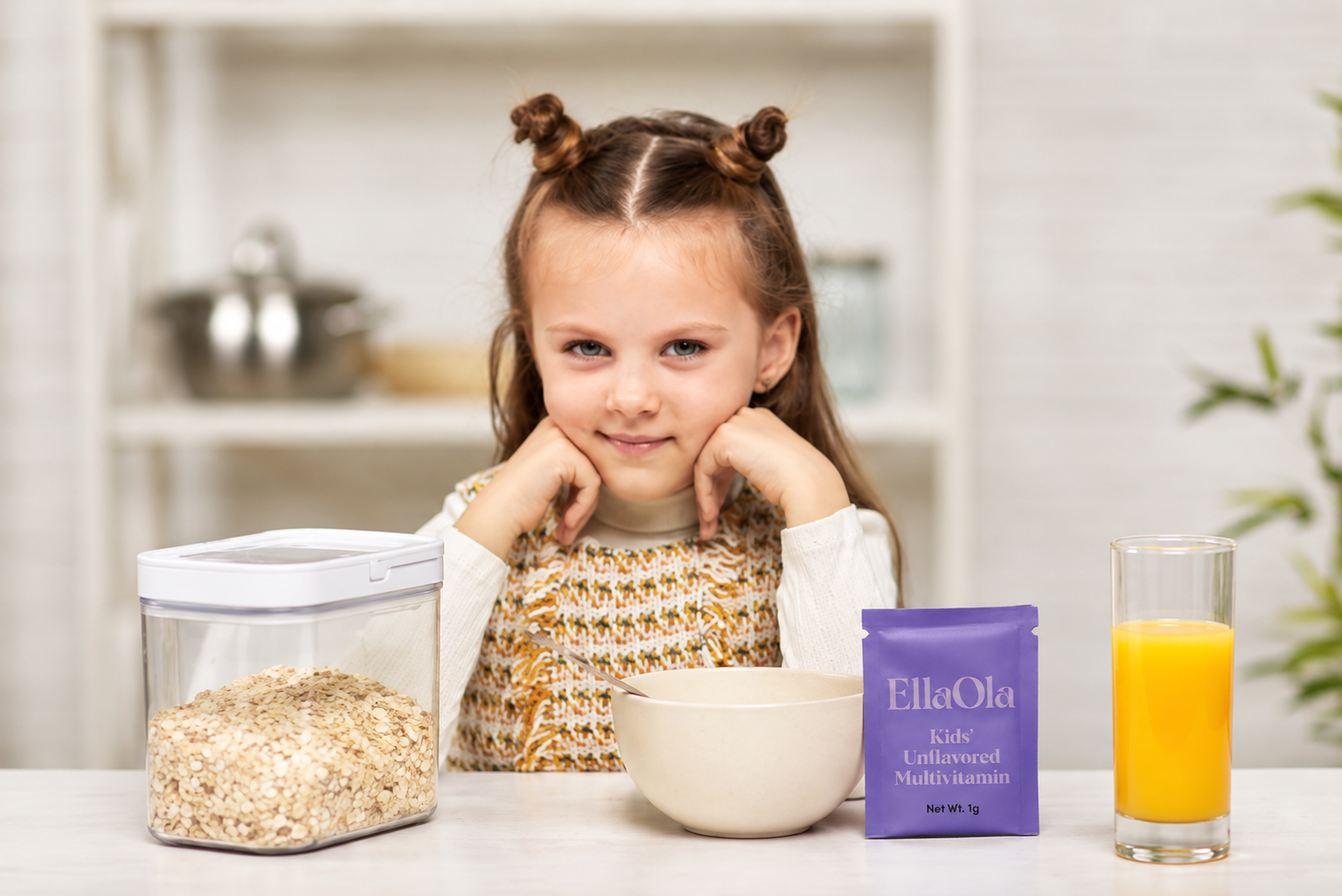
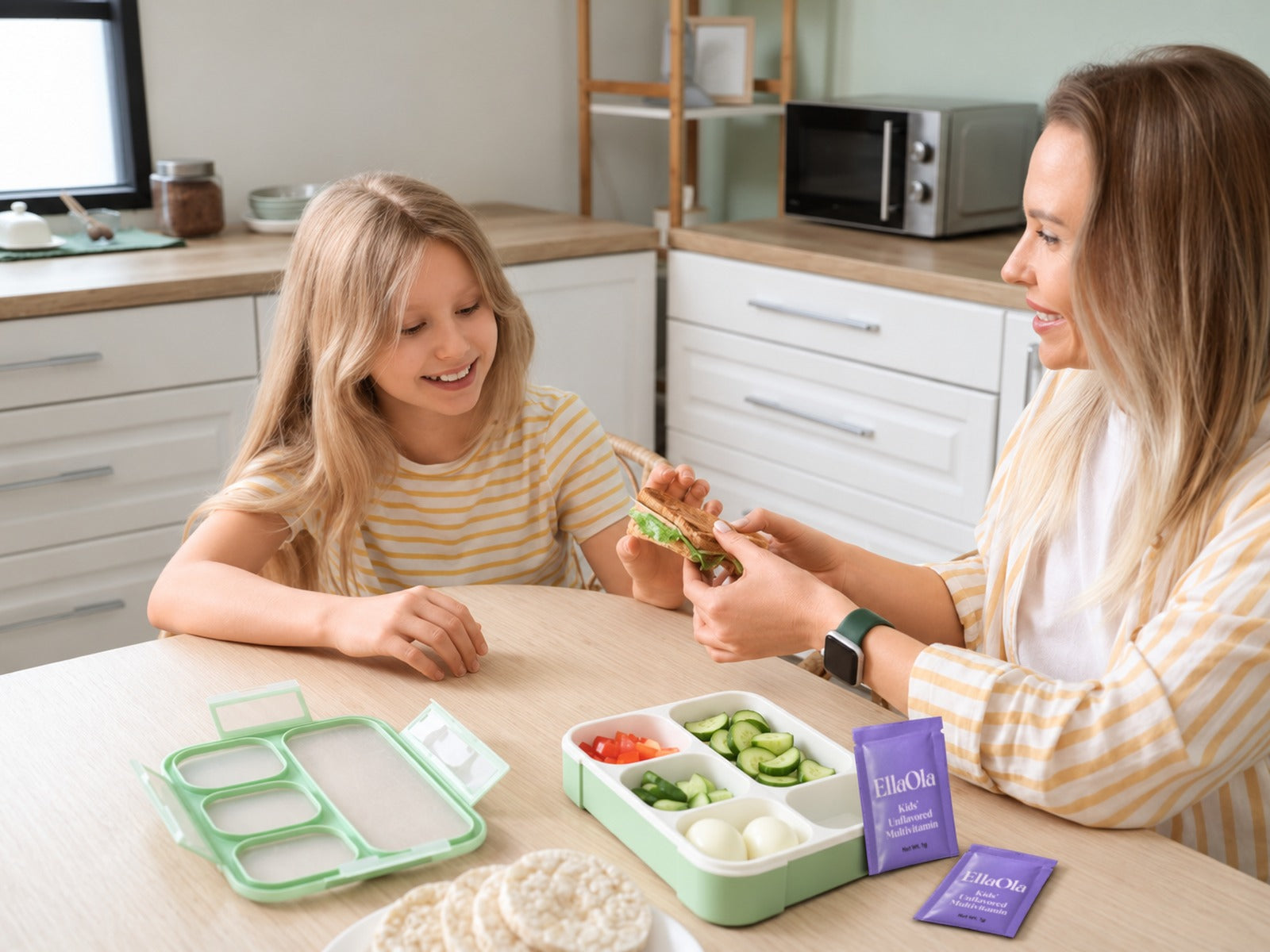
Our Kids' Essential Unflavored Multivitamin, Toddlers' Essential Unflavored Multivitamin (for ages 2 to 3), and Tasteless Iron with Vitamin C all come in pre-measured stick packs of tasteless, colorless powder. Sealed or not, the same storage habits apply.

5) Probiotics
Probiotics are the one product here that's alive. Because they're living bacteria, their numbers can drop during storage, and that count is what the CFU (colony-forming units) figure on the label measures.
That's why voluntary industry guidelines recommend that the CFU count on a label reflect live bacteria at the end of shelf life, not at the time it was made.
Whether a probiotic belongs in the fridge depends on the product. Some need refrigeration and some are shelf stable, so follow the storage instructions on the label.
Our Tasteless Digestive Pre+Probiotic is the shelf-stable kind. It has 15 probiotic strains, 10.5 billion CFUs per serving, and prebiotic fiber, and it doesn't need to be refrigerated, so it lives in the cabinet with everything else.
Is It Safe to Give Kids Expired Vitamins?
We’d replace them. Once a vitamin passes its date, the maker no longer stands behind the amounts on the label, so it may be weaker than the label says.
Gummies and liquids can also spoil before their date, so check them closely even when the date is fine.
Parents often ask whether vitamins that are two years old are still okay. Go by the printed date, not the age of the bottle. A bottle that's sat in a grandparent's cabinet for a decade is long past its date, so dispose of it using the steps below.
Contact the manufacturer if the date is missing or unclear. If your child takes the supplement for a specific nutritional need, like low iron, ask their pediatrician how to maintain the routine while replacing it.
Signs a Vitamin Has Gone Bad
Check for unexpected changes in color, smell, or texture, visible mold, or damaged packaging, even if the product is within its date. A normal appearance does not confirm that an expired vitamin still provides its labeled nutrient amounts.
-
Smell: An unexpected sour, musty, rancid, or otherwise unusual odor.
-
Color: Tablets or gummies that look faded or darkened, or have dark spots.
-
Mold: Any visible fuzz or growth, on anything.
-
Gummy Texture: Unexpected stickiness, fusing, “sweating,” or a change in hardness or softness.
-
Powder Texture: Unexpected clumping or caking, particularly with evidence of moisture or damaged packaging.
-
Liquids: Unexpected cloudiness, bubbling, odor, or separation that differs from the product’s description or shaking instructions.
-
The Bottle Itself: Visible moisture or droplets inside.
How to Store Kids' Vitamins
Where to Keep Them
Keep vitamins in a cool, dry place away from direct sunlight, in the original container with the lid tightly closed. The original bottle also keeps the date and lot number with the vitamins, which you'll want later.
Skip the bathroom. Shower steam raises the humidity every day, and humidity is one of the things that wears vitamins down. The counter beside the stove, kettle, or dishwasher has the same problem with heat and steam.
A kitchen cabinet works well as long as it sits away from those heat sources. The windowsill and a sunny stretch of countertop are the spots to avoid.
Out of Reach, Every Time
Many gummies look and taste like candy, so a bottle within reach makes it easy for a child to eat a handful. Treat gummy vitamins the way you'd treat any medicine.
Iron needs the same care. Federal rules require iron-containing supplements in tablet, capsule, or caplet form to carry a warning about accidental overdose in young children.
Store every supplement securely out of children’s sight and reach, preferably in a locked location, and away from pets. Put it away immediately after each serving. This applies to gummies, liquids, tablets, and powder sachets alike.
If you think your child has taken extra supplements, call Poison Help at 1-800-222-1222 in the U.S. The service is free and confidential. If your child collapses, has a seizure, has trouble breathing, or cannot be awakened, call 911 immediately.
Should Kids' Vitamins Be Refrigerated?
Usually not. The fridge is humid, and moving a bottle in and out can leave condensation inside, so keep vitamins in the cabinet unless the label says to refrigerate, as some liquids and probiotics do. For more on how shelf-stable formulas hold up, see our guide to non-refrigerated kids' vitamins.
On the Go: School, Travel, and the Car
A hot car or a backpack sitting in the sun is the worst place for a bottle of gummies. Pack only the doses you need for the trip and leave the main supply at home in the cabinet. Our pre-measured stick packs make this easy, since you can tuck a few in a bag without opening the rest.
Our Kids' Essential Unflavored Multivitamin mixes into familiar foods and drinks and can be mixed into warm foods, so oatmeal at a hotel breakfast works as well as yogurt at home.
Reading the Date on the Label
Look on the bottom of the bottle, on the label near the barcode, on a box flap, or along the crimped end of a packet. You'll usually see "Exp," "Best By," or "Use By," often next to a lot number, the batch code a maker uses to trace a product.
Choose an amount you can finish before the printed date, and check what you already have before ordering more. If you subscribe to EllaOla, adjust your delivery schedule to match your family’s use so extra boxes do not build up.
Check the date when you buy, too, especially on sale and clearance shelves. If you stock up, use the oldest bottle first.
How to Dispose of Expired Vitamins
The FDA's steps for disposing of unused medicines are a good model for vitamins too. Check whether a local pharmacy or community take-back program accepts vitamins and supplements, since accepted products vary by program. Your pharmacist or local waste authority can help you find an appropriate disposal option.
If there's no take-back option, mix the vitamins with something unappealing like used coffee grounds or cat litter, seal it in a bag, and put it in the household trash. Don't flush them. In a house with kids and pets, the coffee grounds make a trash can full of gummies much less tempting.
When to Keep the Bottle and When to Toss It
Keep a vitamin that's inside its date, has lived in a cool, dry cabinet with the lid on, and looks, smells, and feels the way it did when you opened it. Toss one that's past the date, sweating, clumped, moldy, or smelling off.
If you're replacing an old supply and want help matching a vitamin to your child's age and eating habits, our quiz can point you to the right one, or you can explore our multivitamins.