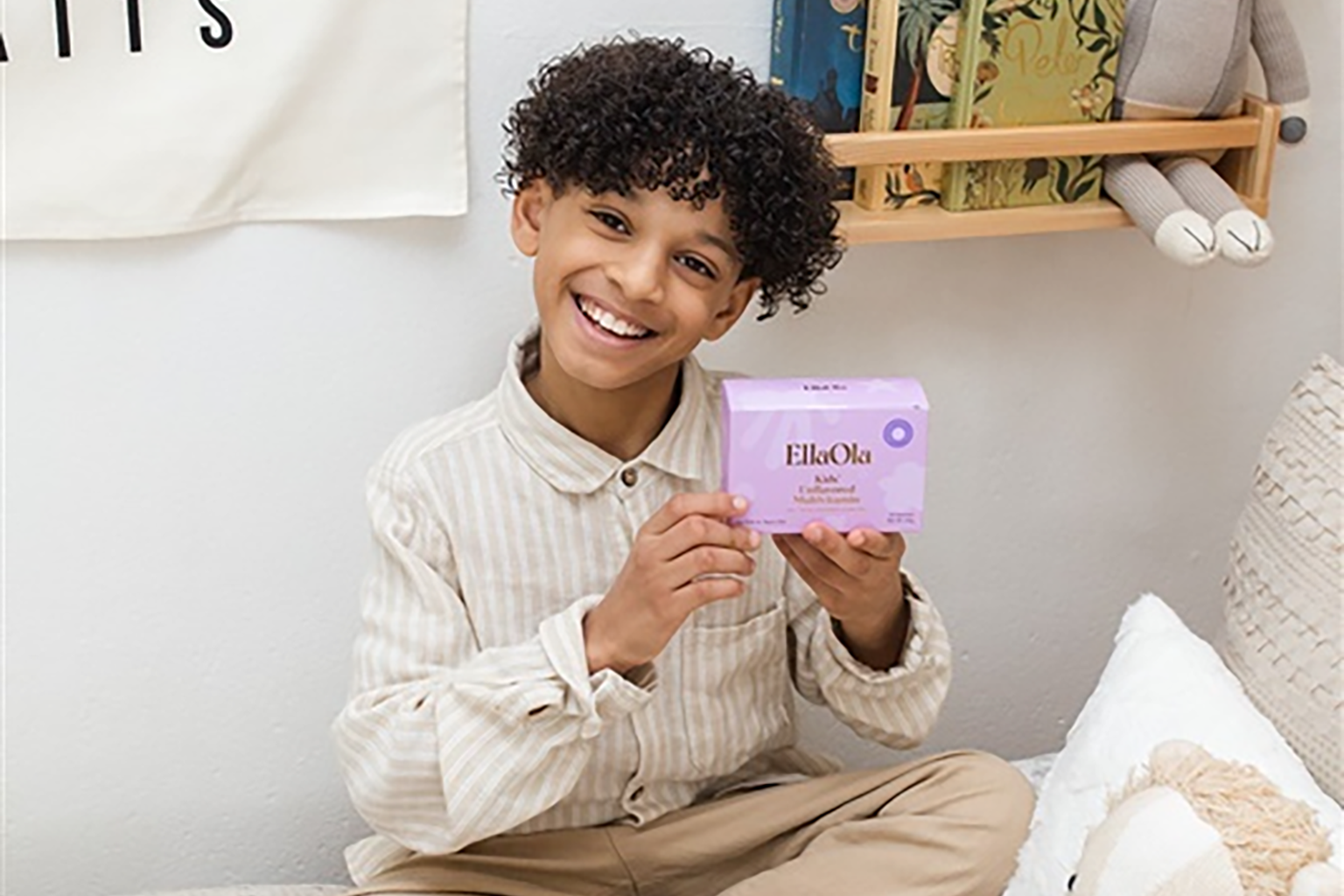

It's 9 pm, your kid is wide awake, and the melatonin gummies are either in the cabinet or sitting in an online cart. Before you decide, it helps to know that these two supplements do completely different jobs. Melatonin is a hormone. Magnesium is a mineral. At EllaOla, we make a melatonin-free magnesium formula for kids. This guide explains how magnesium and melatonin differ, what the research can tell us, and what to discuss with your pediatrician.
Melatonin helps regulate sleep timing. Magnesium supports normal nerve and muscle function, but research on magnesium supplements for children’s sleep is limited. Neither replaces a consistent bedtime routine or assessment of an ongoing sleep problem.
The quick version: magnesium is an essential nutrient, while melatonin is a hormone involved in sleep timing. Neither should be chosen from symptoms alone. Start with a consistent bedtime routine and talk to your pediatrician before adding either supplement, particularly if your child snores, wakes frequently, or remains tired during the day.
What Each One Does in the Body
1) Melatonin: the body's darkness signal
Melatonin is a hormone your child's pineal gland releases as light fades. It tells the brain night has come. A supplement dose adds to that signal, which can move up the time sleepiness arrives.
When melatonin is appropriate, your pediatrician determines the formulation, dose, timing, and duration based on your child’s sleep difficulty.
2) Magnesium: an everyday mineral with a bedtime reputation
Magnesium is an essential nutrient involved in muscle function and nerve signaling, and that nerve-signaling role is where the bedtime reputation comes from.
The catch is that many people come up short. NHANES data cited by the NIH Office of Dietary Supplements show 48% of Americans get less magnesium from food and beverages than their estimated requirement, with adolescents among the most likely to fall short. The best food sources are beans, whole grains, leafy greens, nuts, seeds, and avocado. If you're raising a picky eater, you may notice that list reads like everything your child refuses.
For how magnesium and vitamin D connect at bedtime, see our post on why kids need both vitamin D and magnesium for better sleep.
Magnesium vs. Melatonin: Side-by-Side Comparison
|
Factors |
Melatonin |
Magnesium |
|
What it is |
A hormone the body makes |
An essential dietary mineral with an RDA |
|
How it supports sleep |
Signals night to the brain, shifting sleep timing |
Supports normal nerve and muscle function; evidence for improving children’s sleep is limited |
|
When to discuss it |
Persistent sleep difficulties; a pediatrician determines whether melatonin is appropriate |
Concerns about inadequate magnesium intake; sleep symptoms alone do not establish a need |
|
How fast |
Response depends on the condition, dose, formulation, and timing |
No established pediatric sleep-response timeline |
|
Research in kids |
More pediatric sleep research than magnesium; a pediatrician decides if it fits |
Very few pediatric sleep trials; evidence is mostly adult |
|
Regulation |
Sold as a dietary supplement in the US; the AASM advises handling it like medication |
Sold over the counter as a dietary supplement |
|
Long-term data |
Effects on puberty and hormones aren't well studied |
Nutritional requirements and intake limits are established; long-term use for children’s sleep is less studied |
Melatonin has more pediatric sleep research than magnesium. Magnesium’s nutritional role and established intake limits should not be confused with evidence that supplementation improves children’s sleep.
Sleep Patterns to Discuss With Your Pediatrician
Start with what your child's nights look like.
1) Trouble falling asleep at a normal bedtime
If your child regularly lies awake long past a reasonable bedtime, the body clock may be running late. This is common after summer break, daylight saving changes, and weekend sleep-ins.
Check the basics first: screens off in the last hour, a dim bedroom, and the same wake time every day. If the clock stays stuck after a few weeks, bring it to your pediatrician. Some pediatricians suggest a short melatonin course to reset timing, and that decision, including the dose and how long, belongs with them.
2) Wound-up, restless, and can't settle
Some kids seem tense or restless at bedtime, with a busy mind or uncomfortable legs. Those symptoms do not establish a magnesium shortfall. If they persist, discuss them with your pediatrician, along with any concerns about your child’s diet.
A predictable wind-down does most of the work here. Bath, dim lights, a book, in the same order every night. If worry or anxiety keeps showing up at bedtime, bring it to your pediatrician rather than reaching for a supplement alone.
3) Waking in the night or too early
Night waking has several possible causes. Whether melatonin is appropriate depends on the child’s condition and the formulation, so discuss frequent waking with your pediatrician before trying a supplement.
For night waking, look at snoring or mouth breathing, iron status, hunger, room temperature, and whether bedtime is set too early or too late. If your child wakes frequently most nights, talk to your pediatrician before trying a supplement.

4) Sleeps enough hours but still tired
When the hours are there but the rest isn't, think sleep quality. Red flags are snoring, gasping, restless legs, and daytime hyperactivity.
One thing to ask about: iron. Research in children has linked low ferritin, the body's iron store, to restless sleep. That's a reason to ask your pediatrician about bloodwork, not a promise that iron fixes restless sleep.
We wrote more about this pattern in what to do when your kid is still tired after a full night's sleep. If your pediatrician recommends adding iron, our Tasteless Iron with Vitamin C is a tasteless powder for kids 2 and up that mixes into familiar foods and drinks.
5) Kids with ADHD or autism
Sleep plans for kids with autism or ADHD are best built with their care team. For kids on ADHD stimulant medication, bring sleep timing questions to the prescriber.
Melatonin Safety: What Parents Should Know
The American Academy of Sleep Medicine issued a health advisory in 2022 urging parents to talk with a health care professional before giving melatonin to a child. Dr. Claire McCarthy, one of the pediatricians we develop our supplements with, has written for Harvard Health that some children with neurologic or neurodevelopmental conditions benefit from melatonin, but most don't need it to sleep well, and a calming bedtime routine comes first.
Labels are a real concern. In a 2023 JAMA analysis of 25 melatonin gummy products, most of them labeled for adults, 22 were inaccurately labeled. Among products containing melatonin, actual content ranged from 74% to 347% of what the label said, and one product contained CBD with no detectable melatonin. The AASM notes that the USP Verified Mark is voluntary and that only four melatonin products had received it at the time.
CDC data show reports of pediatric melatonin ingestions to US poison control centers rose 530% from 2012 to 2021, from 8,337 to 52,563, and 94% were unintentional. If melatonin is in your house, store it like medication, out of reach.
Use is common, too. In a 2023 JAMA Pediatrics survey, about 1 in 5 school-age kids and preteens had been given melatonin in the past 30 days. Long-term effects on puberty and hormonal development haven't been well studied, which is one more reason to keep a pediatrician in the loop for anything beyond short-term use.
Magnesium Safety: Daily Needs, Forms, and Limits
Magnesium has something melatonin doesn't: an established Recommended Dietary Allowance (RDA). Per the NIH Office of Dietary Supplements, kids need 80 mg a day at ages 1 to 3, 130 mg at 4 to 8, and 240 mg at 9 to 13.
The daily upper limits for magnesium from supplements and medications are 65 mg for ages 1–3, 110 mg for ages 4–8, and 350 mg for ages 9 and older. Magnesium naturally present in food does not count toward these limits. Review all supplemental sources together, and exceed these limits only under a healthcare provider’s guidance.
Labels list magnesium by form, such as bisglycinate, citrate, or oxide. Bisglycinate is a chelated form that pairs magnesium with the amino acid glycine.
Pediatric sleep studies for magnesium barely exist. A meta-analysis in older adults with insomnia found sleep onset came about 17 minutes faster than with a placebo, on low- to very-low-quality evidence from three small trials.
Magnesium supplementation may help address inadequate intake when appropriate, but that is different from establishing a sleep benefit. Follow your pediatrician’s advice and the product’s directions rather than assuming a particular response timeline.
Can Kids Take Magnesium and Melatonin Together?
Do not combine sleep supplements without your pediatrician reviewing the full ingredient lists and doses. Combination products can make it harder to adjust one ingredient independently.
If your pediatrician recommends melatonin, tell them about any magnesium or other supplements your child takes. They can advise whether each product is needed and how long to continue it.
Sleep Habits That Matter More Than Either
These habits do more for sleep than either supplement:
-
The same bedtime and wake time every day, weekends included
-
Screens off about 60 minutes before bed, with dim lights in the last hour
-
A predictable 20- to 30-minute wind-down: bath, book, same order nightly
-
A cool, dark bedroom, plus outdoor light and activity during the day
Some things go straight to the pediatrician: snoring or gasping, sleep trouble most nights for a few weeks, or changes in daytime behavior or learning. Whichever way you go, keep the routine steady and store any melatonin like medication, out of children’s sight and reach.

Where Our Tasteless Sleep Magnesium Fits
EllaOla Tasteless Sleep Magnesium brings together magnesium bisglycinate chelate, L-theanine, and vitamin B6, and it’s melatonin-free. We developed it with pediatricians and pediatric dietitians for kids 2 and up, and it supports calm and sleep quality.
It’s a tasteless, colorless powder, one stick pack daily at any time, that mixes into familiar foods and drinks like yogurt, oatmeal, applesauce, or milk. It can be taken alongside our Toddlers’ or Kids’ multivitamin. If your child takes any other supplement with magnesium, add the amounts on each label together and compare them with the daily limits above, and consult your pediatrician before starting a new supplement routine.
It has zero sugar and no artificial sweeteners, dyes, or additives, and it’s free from the top 9 food allergens. Food comes first, and when picky eating makes a varied diet hard, our multivitamins for picky eaters help fill everyday nutritional gaps. Explore our Tasteless Sleep Magnesium and our multivitamins. Both are HSA/FSA eligible when purchased through Truemed, and both come with our 45-day money-back guarantee.